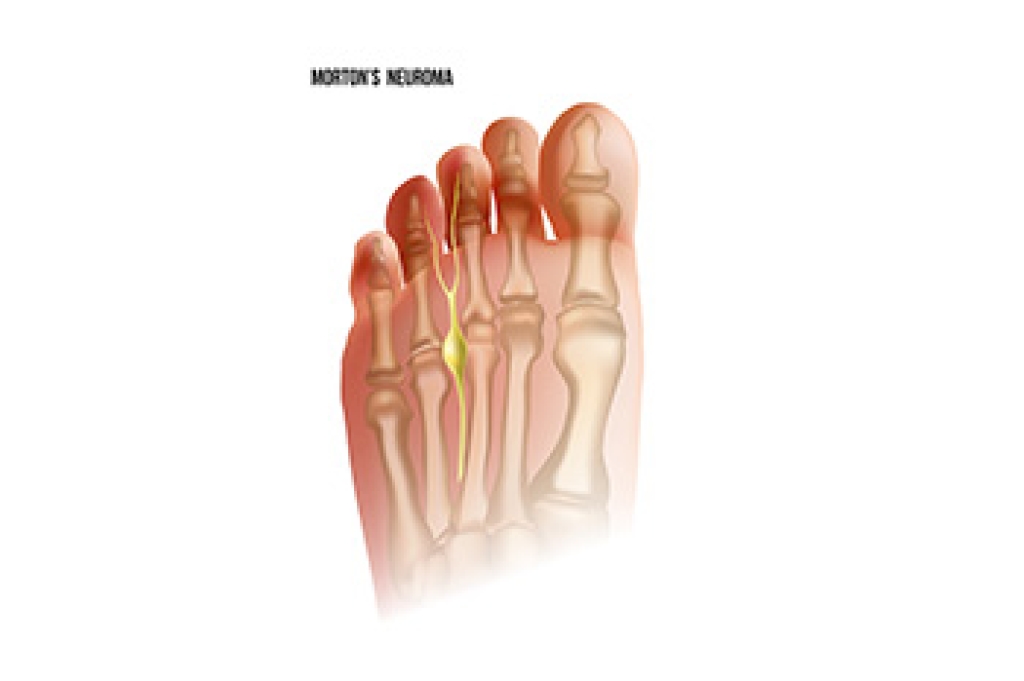
Symptoms of Morton’s Neuroma

The pain from the foot condition which is known as Morton’s neuroma is felt in the ball of the foot. Patients notice the sensation can feel like a pebble is in the shoe or sock and can be uncomfortable. A common reason why Morton’s neuroma may develop can be from frequently wearing high heels. The small narrow toe box generally does not provide adequate room for the toes to move freely and can cause the nerve that lies between the third and fourth toes to become compressed and irritated. People who participate in sports such as tennis, running, and racquetball also may be prone to developing this condition. In severe cases, there may be a tingling or numbing sensation under the toes, and a burning feeling may radiate to the ball of the foot. An MRI may be suggested, and this is often helpful in ruling out an existing lesion. If you have symptoms of Morton’s neuroma, it is suggested that you contact a podiatrist as quickly as possible who can help you with relief and treatment methods.

Morton’s neuroma is a very uncomfortable condition to live with. If you think you have Morton’s neuroma, contact Kenneth Donovan, DPM of Advanced Care Foot and Ankle. Our doctor will attend to all of your foot care needs and answer any of your related questions.  

Morton’s Neuroma

Morton's neuroma is a painful foot condition that commonly affects the areas between the second and third or third and fourth toe, although other areas of the foot are also susceptible. Morton’s neuroma is caused by an inflamed nerve in the foot that is being squeezed and aggravated by surrounding bones.

What Increases the Chances of Having Morton’s Neuroma?

  • Ill-fitting high heels or shoes that add pressure to the toe or foot
  • Jogging, running or any sport that involves constant impact to the foot
  • Flat feet, bunions, and any other foot deformities

Morton’s neuroma is a very treatable condition. Orthotics and shoe inserts can often be used to alleviate the pain on the forefront of the feet. In more severe cases, corticosteroids can also be prescribed. In order to figure out the best treatment for your neuroma, it’s recommended to seek the care of a podiatrist who can diagnose your condition and provide different treatment options.

If you have any questions, please feel free to contact our office located in Charleston, SC . We offer the newest diagnostic and treatment technologies for all your foot care needs.

Read more about What is Morton's Neuroma?

Employment Statistics for Podiatrists

Podiatrists are valued members of the medical community. Primarily specializing in maintaining the health of the feet, podiatrists know how to treat a wide variety of afflictions of the feet, including plantar fasciitis, heel spurs, cracked heels, and more. Certain areas of the country attract large numbers of podiatrists. For example, states such as New York, Florida, and California all have relatively high numbers of employed podiatrists practicing within the state. Many patients are curious to know more about the salary that podiatrists make. Interestingly, a podiatrist’s wage can vary significantly. Some of the top-paying states that employ podiatrists include Idaho, Minnesota, and Virginia. If you are interested in entering the field of podiatry, it is suggested that you talk to a practicing podiatrist for real-life advice.

If you are dealing with pain in your feet and ankles, you may want to seek help from a podiatrist. Feel free to contact Kenneth Donovan, DPM from Advanced Care Foot and Ankle. Our doctor can provide the care you need to keep you pain-free and on your feet.

What Is a Podiatrist?

A podiatrist is a doctor of podiatric medicine who diagnoses and treats conditions of the foot, ankle, and related structures of the leg. Your podiatrist may specialize in a certain field such as sports medicine, wound care, pediatrics, and diabetic care. Podiatrists have the ability to become board certified through training, clinical experience, and then taking an exam.

What Do Podiatrists Do?

On a daily basis, a podiatrist may perform the following activities:

  • Diagnose foot ailments such as ulcers, tumors, fractures, etc.
  • Use innovative methods to treat conditions
  • Use corrective orthotics, casts, and strappings to correct deformities
  • Correct walking patterns and balance
  • Provide individual consultations to patients

It is very important that you take care of your feet. It’s easy to take having healthy feet for granted, however foot problems tend to be among the most common health conditions. Podiatrists can help diagnose and treat a variety of feet related conditions, so it is crucial that you visit one if you need assistance.

If you have any questions, please feel free to contact our office located in Charleston, SC . We offer the newest diagnostic and treatment technologies for all your foot care needs.

Read more about What is a Podiatrist?

We Can Treat Your Foot or Ankle Pain

Foot or ankle pain can negatively affect your day-to-day life and can occur due to several different conditions. Pain can also be an indicator of a more serious underlying condition, which is why you should seek professional help as soon as you notice any abnormalities in your feet.

Common Causes of Foot Pain

The feet undergo a great deal of wear and tear throughout a lifetime. For that reason, it is common for most people to experience some type of foot pain. Sprains and fractures are typical foot conditions that cause pain. In some cases, a bone in the foot will break, often the result of trauma, such as dropping something heavy on it. Sprains are caused by overstretching of a ligament when you land wrong on the foot. Hairline fractures are frequently the result of overuse, as may be experienced by runners or other athletes. A hammertoe can cause pain from rubbing the bone against the top of a shoe. This is caused by an imbalance between a tendon and a muscle in the toe, which makes the joint of the toe rise up. Pain in the ball of the foot, referred to as metatarsalgia, can be extremely painful. It is common among people who run and jump a lot and is often a side effect of a foot deformity, such as bunions, that changes the biomechanics of the feet. Improperly fitting footwear can also cause foot pain from corns, calluses, and blisters. If you are experiencing foot pain that will not go away or worsens, please consider seeing a podiatrist who can determine the cause and offer treatment solutions.

Foot Pain

Foot pain can be extremely painful and debilitating. If you have a foot pain, consult with Kenneth Donovan, DPM from Advanced Care Foot and Ankle. Our doctor will assess your condition and provide you with quality foot and ankle treatment.

Causes

Foot pain is a very broad condition that could be caused by one or more ailments. The most common include:

  • Bunions
  • Hammertoes
  • Plantar Fasciitis
  • Bone Spurs
  • Corns
  • Tarsal Tunnel Syndrome
  • Ingrown Toenails
  • Arthritis (such as Gout, Rheumatoid, and Osteoarthritis)
  • Flat Feet
  • Injury (from stress fractures, broken toe, foot, ankle, Achilles tendon ruptures, and sprains)
  • And more

Diagnosis

To figure out the cause of foot pain, podiatrists utilize several different methods. This can range from simple visual inspections and sensation tests to X-rays and MRI scans. Prior medical history, family medical history, and any recent physical traumatic events will all be taken into consideration for a proper diagnosis.

Treatment

Treatment depends upon the cause of the foot pain. Whether it is resting, staying off the foot, or having surgery; podiatrists have a number of treatment options available for foot pain.

If you have any questions, please feel free to contact our office located in Charleston, SC . We offer the newest diagnostic and treatment technologies for all your foot care needs.

Read more about Foot Pain

Neuropathy and Checking the Feet

Another name for neuropathy is nerve damage. Common symptoms that neuropathy causes are total numbness or a tingling sensation in the feet. The feet may also turn blue and feel cold. This is a condition that is prevalent among diabetic patients, and the lack of feeling on the soles of the feet calls for a need to check the feet daily for cuts that may have developed. Patients who have chronic alcoholism may be at an increased risk for developing this condition, in addition to people who have a vitamin B12 deficiency. Neuropathy falls into three categories, consisting of mono, poly, and distal symmetric polyneuropathy. The former is generally caused by an injury, and affects one nerve. Multiple nerves are affected in patients who have polyneuropathy, and may create blood pressure or gastrointestinal symptoms. The latter may be more prevalent among people who have diabetes, and the upper extremities may become affected. If your feet are numb, it is strongly suggested that you are under the care of a podiatrist who can accurately diagnose and treat neuropathy.

Neuropathy

Neuropathy can be a potentially serious condition, especially if it is left undiagnosed. If you have any concerns that you may be experiencing nerve loss in your feet, consult with Kenneth Donovan, DPM from Advanced Care Foot and Ankle. Our doctor will assess your condition and provide you with quality foot and ankle treatment for neuropathy.

What Is Neuropathy?

Neuropathy is a condition that leads to damage to the nerves in the body. Peripheral neuropathy, or neuropathy that affects your peripheral nervous system, usually occurs in the feet. Neuropathy can be triggered by a number of different causes. Such causes include diabetes, infections, cancers, disorders, and toxic substances.

Symptoms of Neuropathy Include:

  • Numbness
  • Sensation loss
  • Prickling and tingling sensations
  • Throbbing, freezing, burning pains
  • Muscle weakness

Those with diabetes are at serious risk due to being unable to feel an ulcer on their feet. Diabetics usually also suffer from poor blood circulation. This can lead to the wound not healing, infections occurring, and the limb may have to be amputated.

Treatment

To treat neuropathy in the foot, podiatrists will first diagnose the cause of the neuropathy. Figuring out the underlying cause of the neuropathy will allow the podiatrist to prescribe the best treatment, whether it be caused by diabetes, toxic substance exposure, infection, etc. If the nerve has not died, then it’s possible that sensation may be able to return to the foot.

Pain medication may be issued for pain. Electrical nerve stimulation can be used to stimulate nerves. If the neuropathy is caused from pressure on the nerves, then surgery may be necessary.

If you have any questions, please feel free to contact our office located in Charleston, SC . We offer the newest diagnostic and treatment technologies for all your foot care needs.

Read more about Neuropathy

Stress Mats May Help the Feet

There are many professions including the medical field, retail positions, and the restaurant industry that require standing for most of the day. The feet endure the weight of the body, and this can result in foot pain at the end of the day. This may be prevented by wearing shoes that fit correctly, and elevating the feet as often as possible. Additionally, it is beneficial to stand on a stress mat, which can provide cushioning for the overall body. The feet are considered to be the foundation of the body, and maintaining proper foot care while standing or walking may help to reduce the risk of incurring painful conditions. Crooked or misaligned feet may happen from wearing the wrong shoes, which may gradually lead to developing joint pain in other parts of the body. It is beneficial for patients who notice their feet are tender and achy to take prompt action in protecting their feet while working. If you would like more information about effective methods on how to care for your feet during the workday, please consult with a podiatrist. 

While working on the feet, it is important to take the proper care of them. For more information about working on your feet, contact Kenneth Donovan, DPM from Advanced Care Foot and Ankle. Our doctor will treat your foot and ankle needs.

Working on Your Feet

Standing on your feet for long periods of time can cause stress and pain in your feet. Your whole body may experience change in terms of posture, back pain, bunions, callouses and or plantar warts. There are ways to avoid these conditions with proper foot care, smart choices and correct posture.

Positive Changes

Negative heeled shoe – Choosing this shoe type places the heel slightly lower than the ball of the foot. These are great for overall foot health. Find shoes that fit you correctly.

Go barefoot – Our feet were not designed to be enclosed for all hours of the day. Try to periodically expose your feet to air.

Eliminate Pain

Foot Exercises – Performing simple exercises, incorporating yoga and doing stretches are beneficial. This will allow increased blood flow to the area and muscles of the foot.

Achilles tendon – Stretching the foot out flat on the floor will relax the calf muscles and tendon. These exercises can be performed almost anywhere. Make sure you add these exercises to your daily regimen. 

With a little bit of this information and knowing more about foot health, you will notice changes. Foot stretches and proper footwear will help with pain and prevent further issues.

If you have any questions please contact our office located in Charleston, SC . We offer the newest diagnostic and treatment technologies for all your foot and ankle needs.

Read more about Working on Your Feet

Open Wounds May Be Common Among Diabetic Patients

Recent studies have shown that approximately 10 percent of the American population has diabetes. Many of these are seniors, and other health issues may arise from the disease. Diabetic patients need their feet to be looked after and cared for daily, and this can begin by examining the bottom of the feet using a mirror. A family member or health care provider may be able to accomplish this exam, which is effective in noticing existing cuts, bruises, or scrapes that are on the feet. A common condition that diabetic patients can develop is a foot ulcer, and this happens when a cut is unnoticed as a result of neuropathy. This is the inability to feel sensations on the feet, which may cause a small cut to become infected, and often requires prompt medical treatment. An open sore may require an X-ray to be performed, to observe if it has spread to the bone. Washing and drying the feet in addition to cutting the toenails properly are part of good diabetic foot care habits. If you would like more information about diabetic foot care tips, please consult a podiatrist who can help you to manage this condition.

Diabetic foot care is important in preventing foot ailments such as ulcers. If you are suffering from diabetes or have any other concerns about your feet, contact Kenneth Donovan, DPM from Advanced Care Foot and Ankle. Our doctor can provide the care you need to keep you pain-free and on your feet.

Diabetic Foot Care

Diabetes affects millions of people every year. The condition can damage blood vessels in many parts of the body, especially the feet. Because of this, taking care of your feet is essential if you have diabetes, and having a podiatrist help monitor your foot health is highly recommended.

The Importance of Caring for Your Feet

  • Routinely inspect your feet for bruises or sores.
  • Wear socks that fit your feet comfortably.
  • Wear comfortable shoes that provide adequate support.

Patients with diabetes should have their doctor monitor their blood levels, as blood sugar levels play such a huge role in diabetic care. Monitoring these levels on a regular basis is highly advised.

It is always best to inform your healthcare professional of any concerns you may have regarding your feet, especially for diabetic patients. Early treatment and routine foot examinations are keys to maintaining proper health, especially because severe complications can arise if proper treatment is not applied.

If you have any questions, please feel free to contact our office located in Charleston, SC . We offer the newest diagnostic and treatment technologies for all your foot care needs.

Read more about Diabetic Foot Conditions

Keep Your Feet Healthy So You Can Stay Active

Have your feet inspected by a professional before starting a new sport or physical activity. Taking charge of your foot health will keep you in good physical condition and can help you avoid a potential injury, such as a fracture or sprained ankle.

Prevent injuries and see a foot specialist.

Twisting Your Ankle

A twisted ankle, or an ankle sprain, leads to overstretching or tearing of a ligament around the ankle. Ankle sprains make up 85% of ankle injuries. Such sprains usually occur from a sports injury, walking or running on uneven ground, or wearing high heels. Sprains can recur, so making sure to heal properly from a sprained ankle is important. If an ankle twists suddenly, it can force the foot outside its normal range of motion and place stress on the ligaments. When stretched beyond its normal limits, the ligament can start to tear. Torn ankle ligaments are most likely to occur in those under 30 years of age, regardless of gender. There will be mild to significant pain, swelling, and bruising depending on the severity of the sprain. The ability to walk will also be related to the grade of the sprain incurred. If you are having ankle pain after twisting your ankle, see a podiatrist for a proper diagnosis and treatment options.

Ankle pain can be caused by a number of problems and may be potentially serious. If you have ankle pain, consult with Kenneth Donovan, DPM from Advanced Care Foot and Ankle. Our doctor will assess your condition and provide you with quality foot and ankle treatment.

Ankle pain is any condition that causes pain in the ankle. Due to the fact that the ankle consists of tendons, muscles, bones, and ligaments, ankle pain can come from a number of different conditions.

Causes

The most common causes of ankle pain include:

  • Types of arthritis (rheumatoid, osteoarthritis, and gout)
  • Ankle sprains
  • Broken ankles
  • Achilles tendonitis
  • Achilles tendon rupture
  • Stress fractures
  • Bursitis
  • Tarsal tunnel syndrome
  • Plantar fasciitis

Symptoms

Symptoms of ankle injury vary based upon the condition. Pain may include general pain and discomfort, swelling, aching, redness, bruising, burning or stabbing sensations, and/or loss of sensation.

Diagnosis

Due to the wide variety of potential causes of ankle pain, podiatrists will utilize a number of different methods to properly diagnose ankle pain. This can include asking for personal and family medical histories and of any recent injuries. Further diagnosis may include sensation tests, a physical examination, and potentially x-rays or other imaging tests.

Treatment

Just as the range of causes varies widely, so do treatments. Some more common treatments are rest, ice packs, keeping pressure off the foot, orthotics and braces, medication for inflammation and pain, and surgery.

If you have any questions please feel free to contact our office located in Charleston, SC . We offer the newest diagnostic tools and technology to treat your foot and ankle needs.

Read more about Ankle Pain

Orthotics and Children

Orthotics are shoe inserts that serve a variety of purposes and can be either custom-made or over-the-counter. Some orthotics are simply meant to provide support and others are meant to correct certain foot deformities. While orthotics are used by adults sometimes children might also benefit from wearing orthotics. Many children are afflicted by a condition known as Sever’s disease, which causes heel pain. Heel pain is a common painful sensation among children. The use of certain orthotic devices can help combat the damaging effects of heel pain among children and young adults. Besides heel pain, there are also many other different common symptoms that children experience in the feet that can be addressed through the use of orthotics. For example, misaligned feet and knee pain are other common symptoms in children, and orthotics might be a good option. If you have a child that is experiencing any of these problems, contact a podiatrist today. 

If you are having discomfort in your feet and would like to try orthotics, contact Kenneth Donovan, DPM from Advanced Care Foot and Ankle. Our doctor can provide the care you need to keep you pain-free and on your feet.

What Are Orthotics?

Orthotics are inserts you can place into your shoes to help with a variety of foot problems such as flat feet or foot pain. Orthotics provide relief and comfort for minor foot and heel pain but can’t correct serious biomechanical problems in your feet.

Over-the-Counter Inserts

Orthotics come in a wide variety of over-the-counter inserts that are used to treat foot pain, heel pain, and minor problems. For example, arch supports can be inserted into your shoes to help correct overarched or flat feet, while gel insoles are often used because they provide comfort and relief from foot and heel pain by alleviating pressure.

Prescription Orthotics

If over-the-counter inserts don’t work for you or if you have a more severe foot concern, it is possible to have your podiatrist prescribe custom orthotics. These high-quality inserts are designed to treat problems such as abnormal motion, plantar fasciitis, and severe forms of heel pain. They can even be used to help patients suffering from diabetes by treating foot ulcers and painful calluses and are usually molded to your feet individually, which allows them to provide full support and comfort.

If you are experiencing minor to severe foot or heel pain, it’s recommended to speak with your podiatrist about the possibilities of using orthotics. A podiatrist can determine which type of orthotic is right for you and allow you to take the first steps towards being pain-free.

If you have any questions, please feel free to contact our office located in Charleston, SC . We offer the newest diagnostic and treatment technologies for all your foot care needs.

Read more about Foot Orthotics

Connect With Us