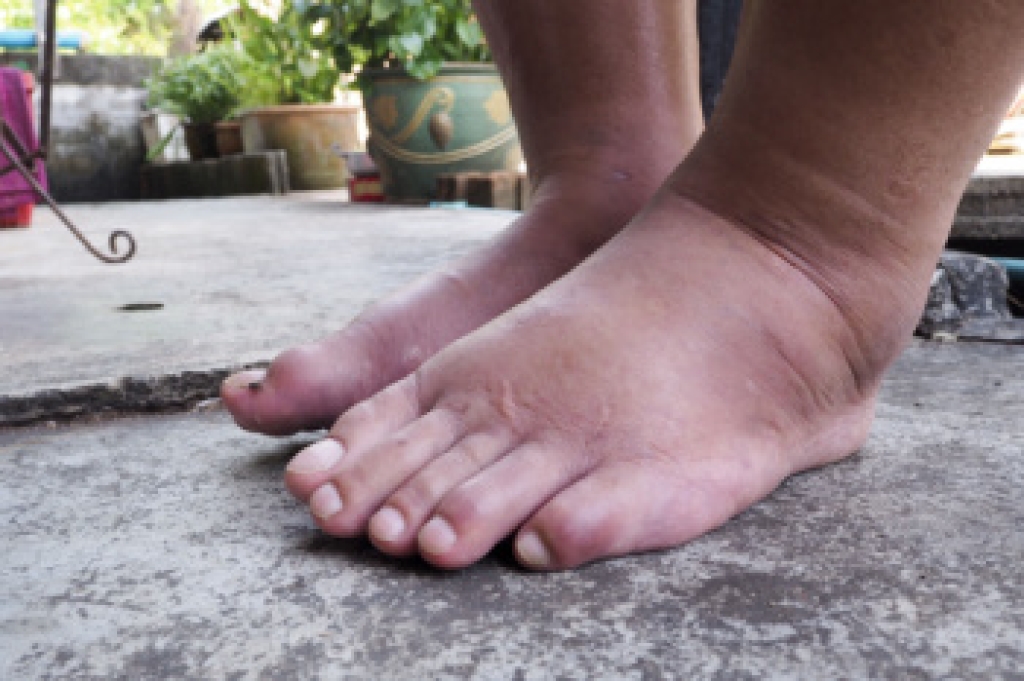
Diseases That Can Cause Swollen Feet

Swollen feet can be a sign of underlying health conditions that affect circulation, fluid balance, or inflammation. Heart disease can lead to fluid retention in the lower extremities due to poor circulation and weakened heart function. Kidney disease affects the body’s ability to remove excess fluids, resulting in swelling in the feet and ankles. Liver disease can cause fluid buildup when the liver fails to produce enough proteins to regulate circulation. Additionally, diabetes may lead to swelling due to poor circulation and nerve damage. Severe infections can cause localized swelling as the body responds to inflammation. Arthritis often results in joint swelling and stiffness, making movement painful. If your feet have become swollen, it is strongly suggested that you consult a podiatrist who can determine what the cause is, and offer appropriate treatment and relief solutions.

Swollen feet can be a sign of an underlying condition. If you have any concerns, contact Kenneth Donovan, DPM of Advanced Care Foot and Ankle. Our doctor can provide the care you need to keep you pain-free and on your feet.

Swollen feet are a common ailment among pregnant women and people who stand or sit for extended periods. Aging may increase the possibility of swollen feet and patients who are obese often notice when their feet are swelling too. There may be medical reasons why swollen feet occur:

  • Phlebitis - A condition that causes the veins to become inflamed and can also cause leg pain.
  • Liver disease - This may lead to low blood levels of albumin which is a protein. This can cause fluid in the blood to pass into the tissues and several areas of the body can become swollen.
  • Heart failure - When the heart doesn’t pump properly the blood that is normally pumped back to the heart can pool in the veins of the legs causing swollen feet.
  • Kidney disease - One of the main functions of the kidneys is releasing excess fluid in the body. This type of condition can make it difficult for the kidneys to function properly, and as a result the feet may become swollen.
  • Deep-vein thrombosis (DVT)- This is a serious condition where blood clots form in the veins of the legs. They can block the return of blood from the legs to the heart which may cause the feet to swell. It is important to be treated by a podiatrist if this condition is present.

Swollen feet can also be caused by bone and tendon conditions, including fractures, arthritis, and tendinitis. Additionally, there may be skin and toenail conditions and an infection may cause the feet to swell. Patients who take medicine to treat high blood pressure may be prone to getting swollen feet. 

Many patients elevate their feet to help relieve the swelling and this is generally a temporary remedy. When a podiatrist is consulted the reason behind the swelling can be uncovered and subsequently treated.

If you have any questions please contact our office located in Charleston, SC . We offer the newest diagnostic and treatment technologies for all your foot and ankle needs.

Read more about Swelling of the Feet

Protect Your Ankles and Feet While Playing Pickleball

Pickleball, one of the fastest-growing sports, offers fun and fitness but comes with risks for sprains, fractures, and falls that affect the ankles and feet. Sudden pivots, quick lateral movements, and uneven court surfaces can strain ligaments or even lead to fractures. Proper warmups are essential to reduce injury. It is important to spend a few minutes stretching calves, Achilles tendons, and hamstrings, and practice gentle ankle rotations. Gradually increasing your heart rate with light jogging or dynamic stretches can prepare your muscles for the game’s demands. Wearing supportive footwear and paying attention to court conditions are additional ways to minimize falls. If you experience foot pain after a pickleball game, it is suggested that you consult a podiatrist who can assess the injury and provide treatment.

Sports related foot and ankle injuries require proper treatment before players can go back to their regular routines. For more information, contact Kenneth Donovan, DPM of Advanced Care Foot and Ankle. Our doctor can provide the care you need to keep you pain-free and on your feet.

Sports Related Foot and Ankle Injuries

Foot and ankle injuries are a common occurrence when it comes to athletes of any sport. While many athletes dismiss the initial aches and pains, the truth is that ignoring potential foot and ankle injuries can lead to serious problems. As athletes continue to place pressure and strain the area further, a mild injury can turn into something as serious as a rupture and may lead to a permanent disability. There are many factors that contribute to sports related foot and ankle injuries, which include failure to warm up properly, not providing support or wearing bad footwear. Common injuries and conditions athletes face, including:

  • Plantar Fasciitis
  • Achilles Tendinitis
  • Achilles Tendon Rupture
  • Ankle Sprains

Sports related injuries are commonly treated using the RICE method. This includes rest, applying ice to the injured area, compression and elevating the ankle. More serious sprains and injuries may require surgery, which could include arthroscopic and reconstructive surgery. Rehabilitation and therapy may also be required in order to get any recovering athlete to become fully functional again. Any unusual aches and pains an athlete sustains must be evaluated by a licensed, reputable medical professional.

If you have any questions please contact our office located in Charleston, SC . We offer the newest diagnostic and treatment technologies for all your foot and ankle needs.

Read more about Sports Related Foot And Ankle Injuries

Laser Treatment for Fungal Toenails

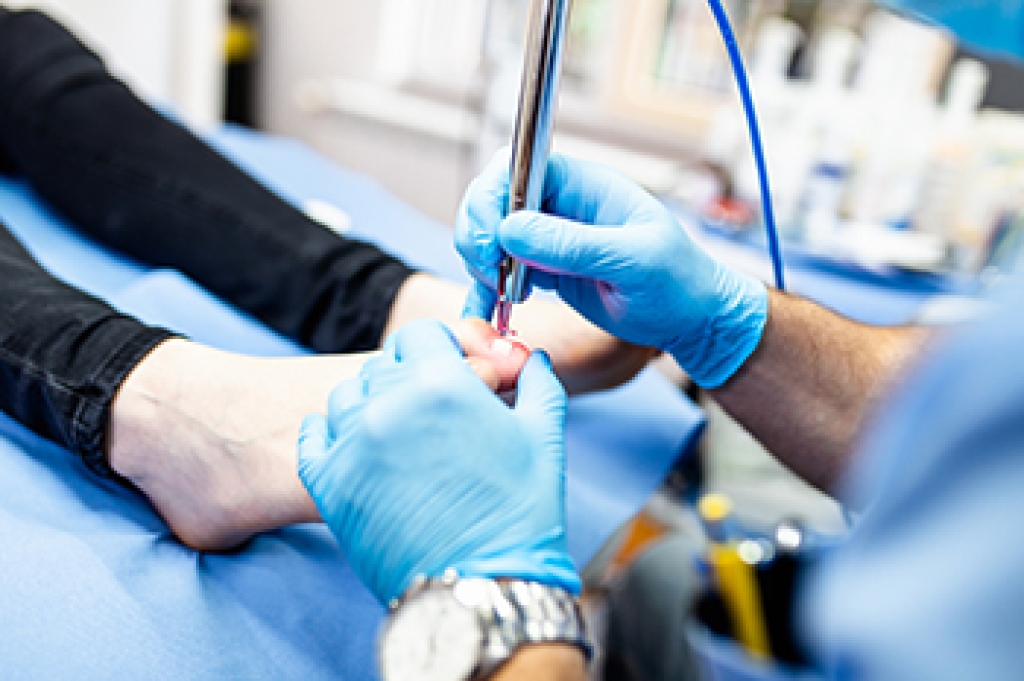
Laser treatment is a non-invasive option for addressing toenail fungus. This procedure uses concentrated light energy to target fungal infections beneath the toenail. It penetrates the nail and reaches the nail bed where the fungus resides. The heat generated by the laser toenail treatment disrupts fungal cells, preventing further growth and reducing infection. Some laser systems vaporize infected tissue, while others sterilize the area to prevent recurrence. Most patients require multiple sessions over several months to see improvements, as toenails grow slowly and healthy regrowth takes time. While laser toenail treatment is generally safe, some people may experience mild discomfort or temporary changes in the treated nail. A podiatrist can assess the severity of your fungal toenail infection, determine if laser therapy is appropriate, and monitor progress. Unlike oral antifungal medications, laser therapy does not typically cause systemic side effects, making it a preferred option for some patients. If you have a fungal toenail infection, it is suggested that you schedule an appointment with a podiatrist to see if laser treatment is right for you.

Laser treatment can be an effective way to get rid of toenail fungus. If you have any questions about laser treatment, consult with Kenneth Donovan, DPM from Advanced Care Foot and Ankle. Our doctor will assess your condition and provide you with quality treatment for fungal nails.

What Are Toenail Fungal Infections?

Onychomycosis, or fungal infection of the nail, is a relatively common and non-serious condition. Around 10 percent of U.S. citizens are afflicted with fungal nails. Common forms of fungus that infect the nail include dermatophytes, yeasts, and molds.

Symptoms of Toenail Fungal Infections Include:

  • Nail thickening
  • Brittleness of the nail
  • Discoloration of the nail

Diagnosis for Fungal Nails

Fungal infections are diagnosed by fungal culture and microscopy. This will rule out any other conditions such as nail trauma, psoriasis, lichen planus, and onychogryphosis.

What Is Laser Treatment?

Laser treatment is a non-invasive, safe, quick, and painless procedure that uses the heat from a laser to kill fungus in the nail. Each infected nail is targeted with a laser for several minutes. The treatment is usually utilized several different times over a select period. During this time, a podiatrist will keep an eye on the infection.

If you have any questions, please feel free to contact our office located in Charleston, SC . We offer the newest diagnostic and treatment technologies for all your foot care needs.

Read more about Laser Treatment for Fungal Nails

Causes and Prevention of Blisters From Running

Blisters are common injuries for runners, often caused by friction between the skin and footwear or socks. When a runner's feet move within shoes that do not fit properly or are made of materials that rub against the skin, the skin layer becomes irritated, resulting in a fluid-filled bubble. Several factors contribute to blister formation, including moisture, prolonged pressure, and wearing poorly-fitting shoes. The friction intensifies with sweat, causing the skin to become more vulnerable. In addition to uncomfortable shoes, wearing socks made from cotton rather than moisture-wicking materials can increase the risk of blisters. To prevent blisters while running, it is important to choose well-fitting shoes and wear socks that keep feet dry. Taking care to check for any areas of irritation during runs can also help in preventing painful blisters. If you have a foot blister that is bothersome or has become painful, it is suggested that you consult a podiatrist who can offer effective relief and prevention methods.

Blisters are prone to making everyday activities extremely uncomfortable. If your feet are hurting, contact Kenneth Donovan, DPM of Advanced Care Foot and Ankle. Our doctor can provide the care you need to keep you pain-free and on your feet.

Foot Blisters

Foot blisters develop as a result of constantly wearing tight or ill-fitting footwear. This happens due to the constant rubbing from the shoe, which can often lead to pain.

What Are Foot Blisters?

A foot blister is a small fluid-filled pocket that forms on the upper-most layer of the skin. Blisters are filled with clear fluid and can lead to blood drainage or pus if the area becomes infected.

How Do Blisters Form?

Blisters on the feet are often the result of constant friction of skin and material, usually by shoe rubbing. Walking in sandals, boots, or shoes that don’t fit properly for long periods of time can result in a blister. Having consistent foot moisture and humidity can easily lead to blister formation.

Prevention & Treatment

It is important to properly care for the affected area in order to prevent infection and ease the pain. Do not lance the blister and use a Band-Aid to provide pain relief. Also, be sure to keep your feet dry and wear proper fitting shoes. If you see blood or pus in a blister, seek assistance from a podiatrist.

If you have any questions, please feel free to contact our office located in Charleston, SC . We offer the newest diagnostic and treatment technologies for all your foot care needs.

Read more about Blisters

Connect With Us